 Lyrith's Tower
Board Games to Start With: Beginner's Guide
If you want to move beyond Monopoly but don't know where to start, here are the best modern board games to make the leap. These are ideal titles for beginners, with simple rules and plenty of guaranteed fun.
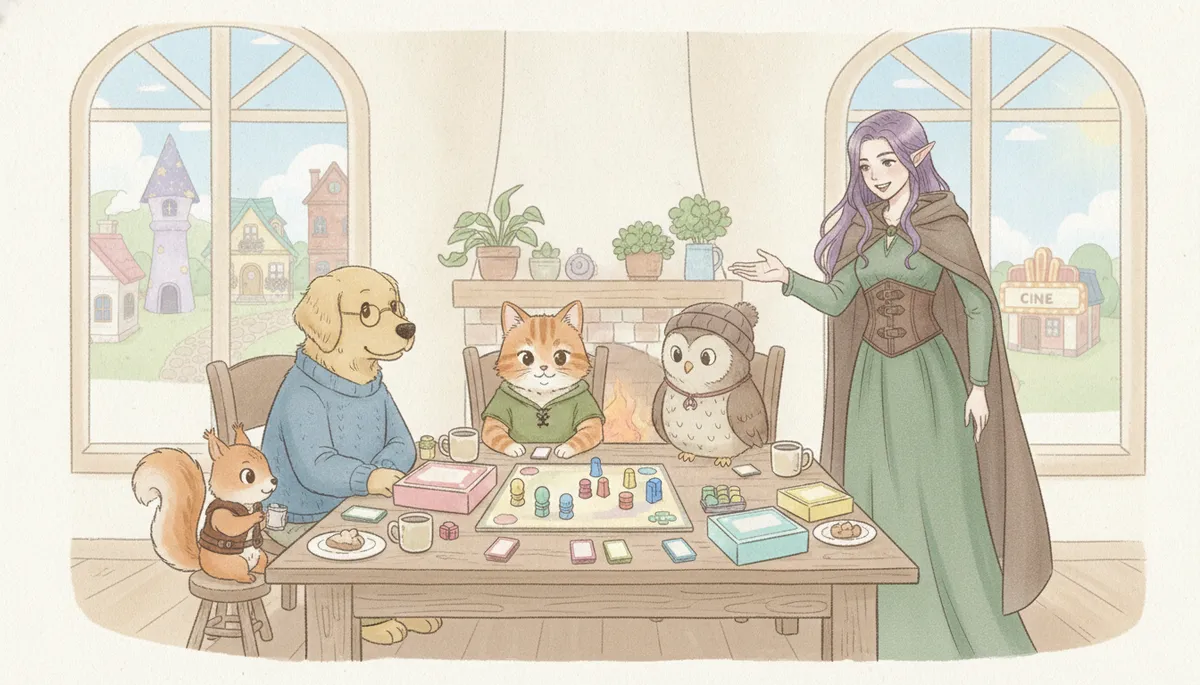
What Are Gateway Board Games?
Gateway games are titles specifically designed to bridge the gap between traditional, lifelong games and the vast universe of modern board games.
They are ideal for starting out because they have very intuitive rules that are easy to explain in minutes. They offer a perfect balance between luck and accessible strategy, foster a lot of social interaction without being frustrating for newcomers, and feature attractive components and a contained playtime that encourages repeat plays.
- Intuitive rules explained in minutes
- Perfect balance between luck and strategy
- High social interaction without frustration
- Contained playtime that encourages repeat plays
Catan, The Colonization Classic
First published in 1995 by Klaus Teuber and edited in Spanish by Devir, Catan put modern board games on the global map. Its modular hexagonal board changes in every game, ensuring high replayability. Plus, it forces you to negotiate resources with other players, creating a very lively social dynamic.
It supports 3 to 4 players, lasts 60 to 90 or even 120 minutes, and is recommended for ages 10 and up. Its main mechanics are resource management, trading, modular tile placement, and negotiation.
The golden rule and objective of the game are very simple: the first player to reach 10 victory points by building settlements, cities, and roads wins.
- Author: Klaus Teuber
- Publisher: Devir
- Players: 3 to 4
- Playtime: 60 to 120 minutes
- Age: 10 and up
Carcassonne, Building the Map Tile by Tile
Designed by Klaus-Jürgen Wrede and released in 2000, Carcassonne won the prestigious Spiel des Jahres award in 2001. In this game, there is no pre-set board; the map is created randomly by everyone as the game progresses, making each session unique. Its rules are learned in just a few minutes.
It's designed for 2 to 5 players, lasts between 30 and 45 minutes, and is recommended for ages 7 or 8 and up. It uses mechanics like tile placement, map building, majority control, and worker placement known as meeples.
On their turn, a player draws and places a terrain tile and can choose to place a follower to dominate roads, cities, or monasteries and score as many points as possible.
- Author: Klaus-Jürgen Wrede
- Publisher: Devir
- Players: 2 to 5
- Playtime: 30 to 45 minutes
- Age: 7 or 8 and up
Ticket to Ride!, Exciting Railway Routes
Created by Alan R. Moon and awarded the Spiel des Jahres in 2004, Ticket to Ride! is a fantastic option to start with. It features very attractive components, specifically charming plastic train cars. It visually and cleanly explains geography and route connections, combining the tension of fulfilling your own objectives with subtle blocking of rivals.
It plays with 2 to 5 players, lasts between 30 and 60 minutes, and is suitable for ages 8 and up. Its main mechanics are card management, set collection, and route building.
The goal is to collect colored train car cards to claim railway routes on the map and connect the cities indicated on your secret destination tickets to score points.
- Author: Alan R. Moon
- Publisher: Asmodee
- Players: 2 to 5
- Playtime: 30 to 60 minutes
- Age: 8 and up
Azul and Splendor, Elegance and Fast Development
Azul, created by Michael Kiesling and winner of the Spiel des Jahres in 2018, is visually stunning with its colorful ceramic-like resin tiles. Its rules are very simple, but it hides subtle tactical depth for cleanly disrupting opponents' plans. It supports 2 to 4 players, lasts 30 to 45 minutes, and is recommended for ages 8 and up.
On the other hand, Splendor is a game by Marc André from 2014 where the gem tokens have a feel and weight similar to poker chips. It offers a breakneck pace where you see your commercial empire grow turn by turn. It plays with 2 to 4 people, lasts 30 minutes, and is recommended for ages 10 and up.
In Azul, you tile the palace to score points, while in Splendor, you build development cards and buy gems to reach 15 prestige points.
- Azul: 2 to 4 players, 30 to 45 minutes, ages 8+
- Splendor: 2 to 4 players, 30 minutes, ages 10+
Codenames and Tips for Your First Game
Codenames, known in Spanish as Código Secreto and created by Vlaada Chvátil, is the ultimate party game. It requires zero setup time and its rules can be explained in under two minutes. Ideal for groups of 2 to 8 or more players, it pits two teams against each other to uncover their secret agents through single-word clues.
To make your first game a success, choose the game based on the group. First, explain the ultimate goal before detailing turns or exceptions. Run a practice round or an example if necessary, and above all, don't obsess over winning; the important thing is to have a good time.
- Choose the game based on the group's profile
- First, explain how to win the game
- Do an open practice round
- Prioritize fun over victory
Frequently asked questions
What is a gateway board game?
It's a modern title with simple rules and accessible mechanics that serves as a bridge between traditional games and complex modern board games.
Which is the best game to start with children?
Carcassonne and Ticket to Ride are excellent options for ages 7 or 8 and up, thanks to their visual rules and attractive components.
How long do these games usually last?
The vast majority of these introductory games have a contained playtime that ranges between 30 and 60 minutes per session.

«Stop by Serranen Village anytime and roll the dice with us!»
View Meeplemancer on Google Play