
 Mochi's Clinic
Cat Vaccination Schedule: What and When
Keeping your cat's vaccinations up to date is the best way to protect their health. Here's the official schedule based on WSAVA guidelines and clinical practice in Spain.
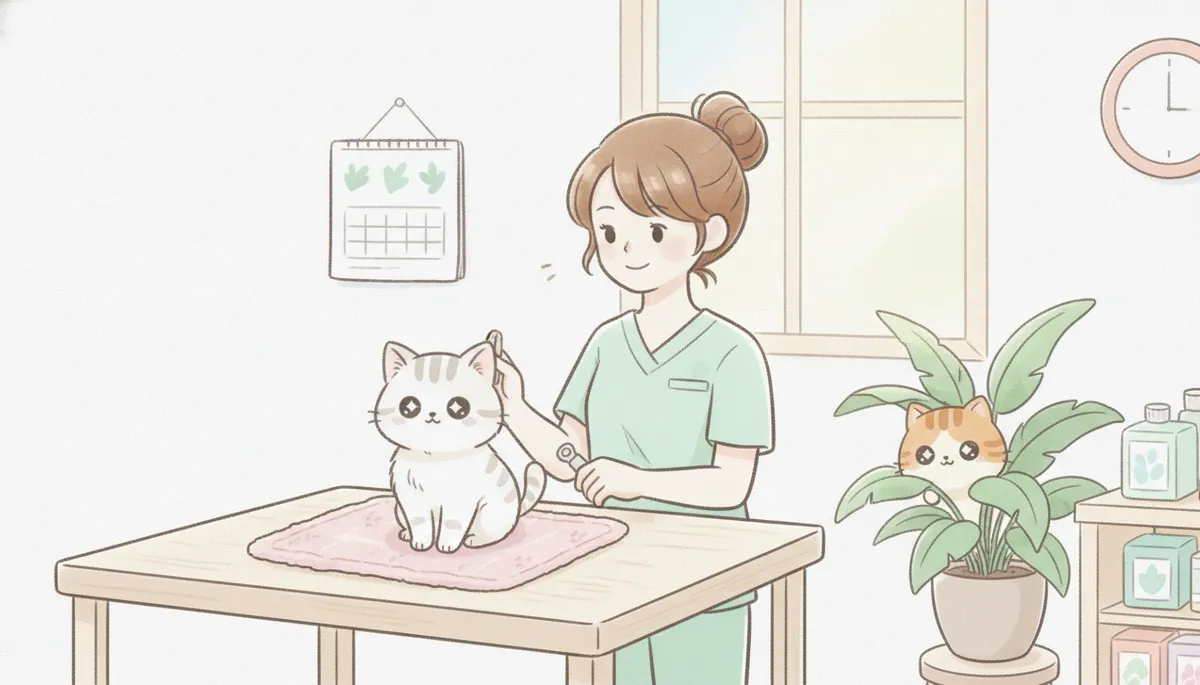
This is general information: for any health concerns, consult your veterinarian.
Reference Organizations and Vaccine Classification
To establish your feline's vaccination schedule, veterinarians rely on the updated guidelines from the WSAVA (World Small Animal Veterinary Association) and the recommendations of the European advisory board ABCD. These guidelines differentiate vaccines based on their necessity.
There are essential vaccines, called core vaccines, that any cat in the world should receive regardless of their lifestyle. On the other hand, non-essential vaccines are assessed individually based on the animal's environment and lifestyle.
- Essential vaccines: recommended for all cats, such as the trivalent vaccine.
- Non-essential vaccines: administered based on risk and environment.
- Rabies: essential in endemic areas and mandatory according to the regulations of each autonomous community in Spain.
Essential Vaccines and Diseases They Prevent
The feline trivalent vaccine is the basis of protection and prevents three serious and highly contagious diseases. Feline panleukopenia is a highly fatal parvovirus infection in kittens.
Feline herpesvirus type 1 causes severe respiratory and ocular problems, while feline calicivirus causes respiratory symptoms, ulcers, and painful lesions in the oral cavity.
- Feline panleukopenia: highly contagious and fatal parvovirus.
- Feline herpesvirus type 1: rhinotracheitis and ocular problems.
- Feline calicivirus: respiratory symptoms and oral ulcers.
Feline Leukemia and Rabies Vaccines in Spain
Feline leukemia is a retroviral virus that reduces the animal's life expectancy. According to WSAVA, it is considered essential for all young cats under one year old and for adults that go outdoors or live with other cats in endemic areas.
Before administering the leukemia vaccine, it is highly recommended to perform a detection test. Regarding rabies, in cats, it depends on the autonomous community: in some it is mandatory and in others it is not. What doesn't change is that it is mandatory for travel outside of Spain.
Kitten Ages and Primary Vaccination Schedule
The primary vaccination series with essential vaccines should begin between six and eight weeks of age. It is not advisable to start earlier to prevent maternal antibodies from colostrum from blocking the vaccine's effect.
Doses should be repeated every three or four weeks. The last dose of the series in kittens is administered at sixteen weeks or older, and a first booster is recommended at twenty-six weeks or one year of age, depending on clinical judgment.
- Start: between 6 and 8 weeks of age.
- Intervals: repeat every 3 or 4 weeks.
- Final dose: at 16 weeks of age or older.
- First booster: at 26 weeks or one year of age.
Indoor Cats vs. Cats with Outdoor Access
If your cat lives exclusively indoors, it still needs the essential trivalent vaccine. Pathogens can enter the home indirectly through shoes, clothing, insects, or occasional visits from other animals.
In contrast, the feline leukemia vaccine is optional for strictly solitary indoor cats. For cats that go outdoors or have contact with other felines, the feline leukemia vaccine is highly recommended because they are at higher risk.
Boosters in Adults and Clinical Safety
After the first booster in youth, essential or trivalent vaccines in healthy adult cats can be spaced up to three years, depending on the commercial product and the veterinarian. Non-essential vaccines or rabies may require strict annual or biennial schedules.
Additionally, to prevent post-injection sarcoma, guidelines recommend using non-adjuvanted vaccines whenever possible and applying correct anatomical rotation of the injection site documented in the clinical history.
Frequently asked questions
Does an indoor cat need to be vaccinated?
Yes, indoor cats need the trivalent vaccine because viruses can enter the home through shoes or clothing.
When is a kitten given its first vaccine?
Primary vaccination should begin between six and eight weeks of age to avoid interference from maternal antibodies.
Is the rabies vaccine mandatory in Spain?
It depends on the autonomous community: ask your veterinarian about the regulations in yours. It is always mandatory for traveling outside Spain.
How often do adult cats need booster shots?
Essential vaccines in healthy adults can be spaced up to three years, while leukemia or rabies may require annual check-ups.

«Hi, I'm Mochi. Since I live glued to the window watching the birds, my human keeps me up-to-date with my shots so I can stay strong and healthy.»
View PetHub on Google Play