 Mochi's Clinic
Toxic Foods for Dogs and Cats at Home
Many foods we eat daily are dangerous for our pets. We review the pantry's blacklist according to veterinarians.
This is general information: for any health concerns, consult your veterinarian.
Chocolate, Grapes, and Other Common Dangers
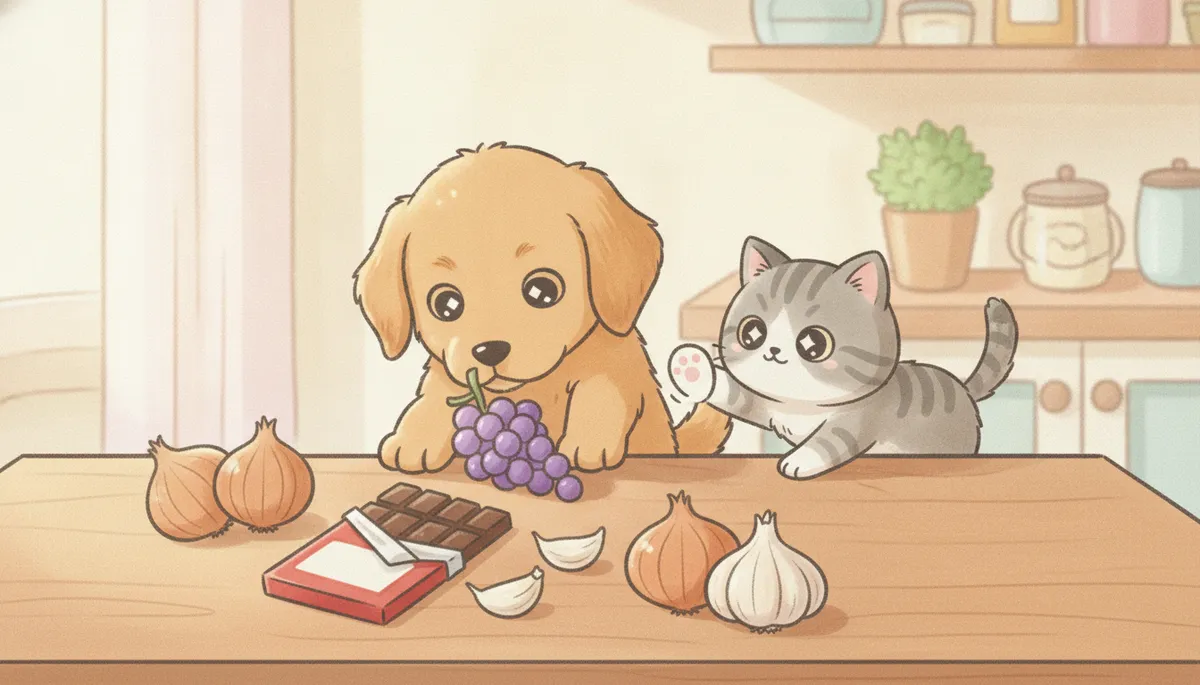
Chocolate contains methylxanthines, specifically theobromine and caffeine, which act as stimulants of the central nervous and cardiovascular systems. Dogs and cats cannot metabolize them properly. Toxicity depends on the animal's weight, the amount ingested, and the cocoa purity. Dark chocolate and baking chocolate are the most dangerous, while white chocolate has the lowest amount. Symptoms include vomiting, diarrhea, hyperactivity, restlessness, tachycardia, cardiac arrhythmias, rapid breathing, muscle tremors, increased thirst or urination, seizures, and death in severe cases.
Grapes and raisins are also on the blacklist. Although the exact toxic principle is still not scientifically known with certainty, their ingestion can trigger irreparable damage and acute kidney failure in both dogs and cats. Symptoms include vomiting, diarrhea, anorexia, lethargy, dehydration, abdominal pain, increased thirst and urination, or a drastic decrease in urine production associated with kidney failure.
- Dark and baking chocolate: maximum danger due to theobromine
- Grapes and raisins: risk of acute kidney failure in dogs and cats
Onion, Garlic, and Xylitol
Onion and garlic belong to the Allium genus and contain organosulfur compounds like thiosulfates, sulfoxides, and disulfides. They damage and destroy red blood cells because animals lack specific enzymes to digest them. All forms are dangerous: raw, cooked, powdered, dehydrated, or in juice, affecting cats and dogs particularly. Symptoms can take several days to appear and include hemolytic anemia, weakness, apathy, lethargy, loss of appetite, pale gums, dark urine, and difficulty breathing.
Xylitol is an artificial sweetener found in sugar-free gum, candies, baked goods, toothpastes, and some peanut butters. In dogs, it causes a rapid and massive release of insulin. Its effects cause severe hypoglycemia, meaning a dangerous drop in blood sugar, as well as vomiting, lethargy, weakness, loss of coordination or ataxia, seizures, and, in the most severe cases, acute liver failure.
- Onion and garlic in any form: destroy red blood cells
- Xylitol: found in sugar-free gum and toothpastes
- Xylitol effect: severe hypoglycemia and liver failure
Avocado, Alcohol, and Caffeine
Avocado contains a fungicidal toxin called persin, found mainly in the leaves, skin, seeds or pit, and the plant itself. The pulp has lower concentrations and loses toxicity when industrially processed in pet food, but it is still very fatty and can cause digestive problems. Symptoms range from gastrointestinal irritation, vomiting, diarrhea, apathy, and difficulty breathing to congestion and fluid accumulation around the heart tissues in severe cases.
Alcohol is present in alcoholic beverages and fermented foods or doughs. It is absorbed very quickly by dogs and cats. Doses as small as a tablespoon can cause serious harm to cats. Symptoms include vomiting, diarrhea, incoordination or drunkenness, central nervous system depression, difficulty breathing, tremors, blood pH changes, coma, and death.
Caffeine is found in coffee, tea, and energy drinks. Like chocolate, it contains methylxanthines that act as drastic stimulants of the nervous and cardiovascular systems. There is no specific antidote. Warning signs include restlessness, agitation, hyperactivity, rapid breathing or panting, palpitations, increased heart rate, muscle tremors, vomiting, and seizures.
- Avocado: persin is in leaves, skin, and pit
- Alcohol: a single tablespoon can severely harm a cat
- Caffeine: stimulant with no specific antidote
Cooked Bones and Lilies for Cats
Cooked bones lose moisture and collagen when exposed to heat. This makes them extremely fragile and prone to splintering easily when the animal chews them. As a result, they can cause serious injuries to the mouth or the entire gastrointestinal tract, as well as perforations and intestinal blockages that often require emergency surgery.
On the other hand, lilies of the genus Lilium are an exclusive and very serious danger to cats. All parts of the plant, including leaves, petals, pollen, and even the vase water, are highly toxic. Ingesting minimal amounts, such as a few leaves or pollen while grooming, causes direct cell damage to the kidneys. Symptoms begin with vomiting, loss of appetite, lethargy, excessive salivation, and disorientation, rapidly progressing to fulminant acute kidney failure within 24 to 72 hours if immediate treatment is not received.
- Cooked bones: risk of splintering and perforating the intestine
- Lilies: highly toxic to cats, even from pollen in water
What to Do in Case of Poisoning
If you suspect your pet has ingested a forbidden food, veterinary sources strongly advise against waiting to see if symptoms disappear on their own, a practice known as 'watch and wait.' Time is crucial to save the animal's life. You must immediately contact your regular veterinarian, go to an emergency veterinary hospital, or call specialized hotlines.
If you think your pet has eaten something from this list, call your veterinarian or a 24-hour emergency clinic immediately, even if they don't have symptoms yet. Before calling, gather key information: exact substance ingested, estimated quantity, time elapsed, and your pet's current weight.
It is very important not to try to induce vomiting at home with home remedies like hydrogen peroxide, unless a veterinarian explicitly instructs you to do so and under their direct supervision, as it could drastically worsen the situation depending on the toxin.
- Do not wait to see if symptoms improve on their own
- Call the veterinarian or the Poison Control Center
- Do not induce vomiting at home without veterinary supervision
Frequently asked questions
Why are grapes and raisins dangerous?
They can cause irreparable damage and acute kidney failure in both dogs and cats.
Are cooked garlic and onion toxic?
Yes, all forms are dangerous because they destroy red blood cells.
What happens if a cat brushes against a lily?
Ingesting even the pollen while grooming can cause acute kidney failure within hours.

«I'm Mochi, and although human food smells great, I prefer to stick to my kibble and avoid a big scare at the vet's.»
View PetHub on Google Play